Infographics and memes

  • Snow-capped mountains under a cloudy sky with green and brown hills in the foreground.

    I’m passionate about creating infographics and memes - they allow me to distill complex knowledge into easily digestible nuggets. This is empowering! Information is power!

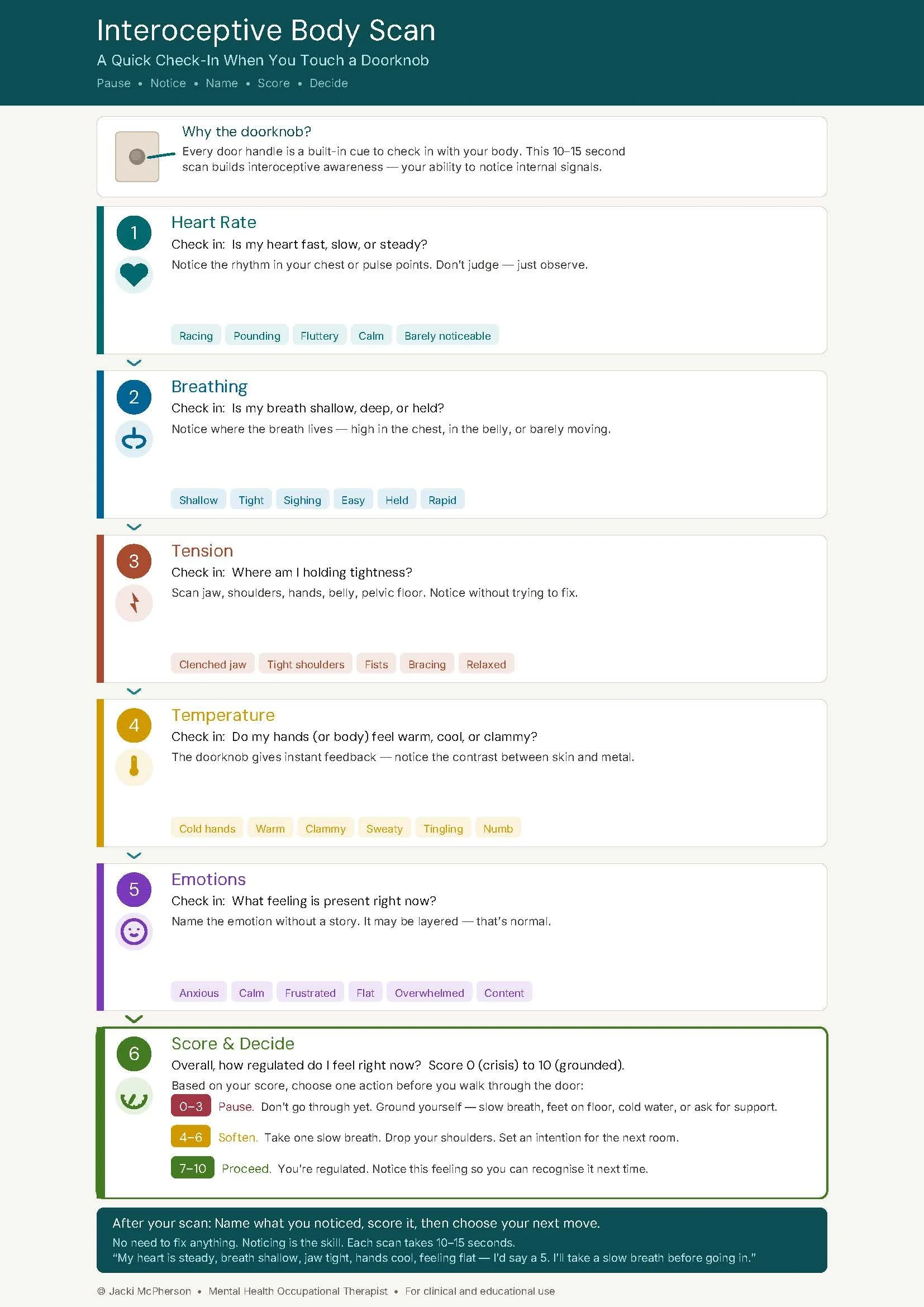
  • A detailed guide on conducting an interoceptive body scan, covering topics such as heart rate, breathing, tension, temperature, emotions, and scoring and decision-making, with step-by-step instructions and explanations.

    Interoception... It's a tricky one.

    A little task I’ve been asking my clients to perform before they leave a room. A task to develop their sense of what their body is feeling (and to then honour those feelings). If you sense that you’re feeling too tense, hot and anxious - maybe think about either reducing what you’re about to do, or not do it at all (find an alternative time, when your body score is higher) :)

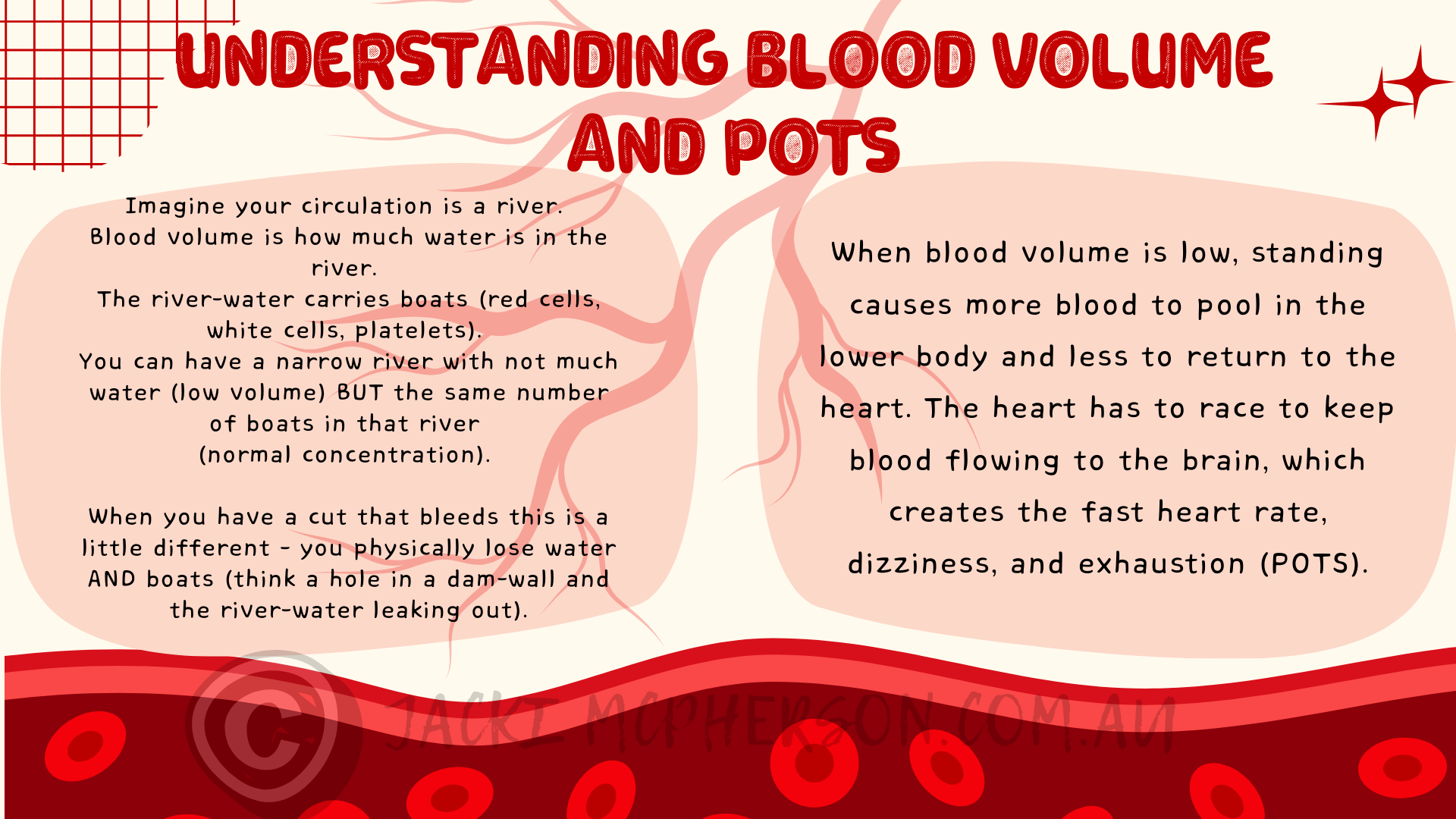
  • Educational poster titled 'Understanding Blood Volume and POTS' with a red and white color scheme. It features a stylized blood vessel diagram and text explaining blood volume as a river, describing red cells, white cells, and platelets, and how blood volume affects circulation and POTS symptoms.

    Explaining 'Low Blood Volume'

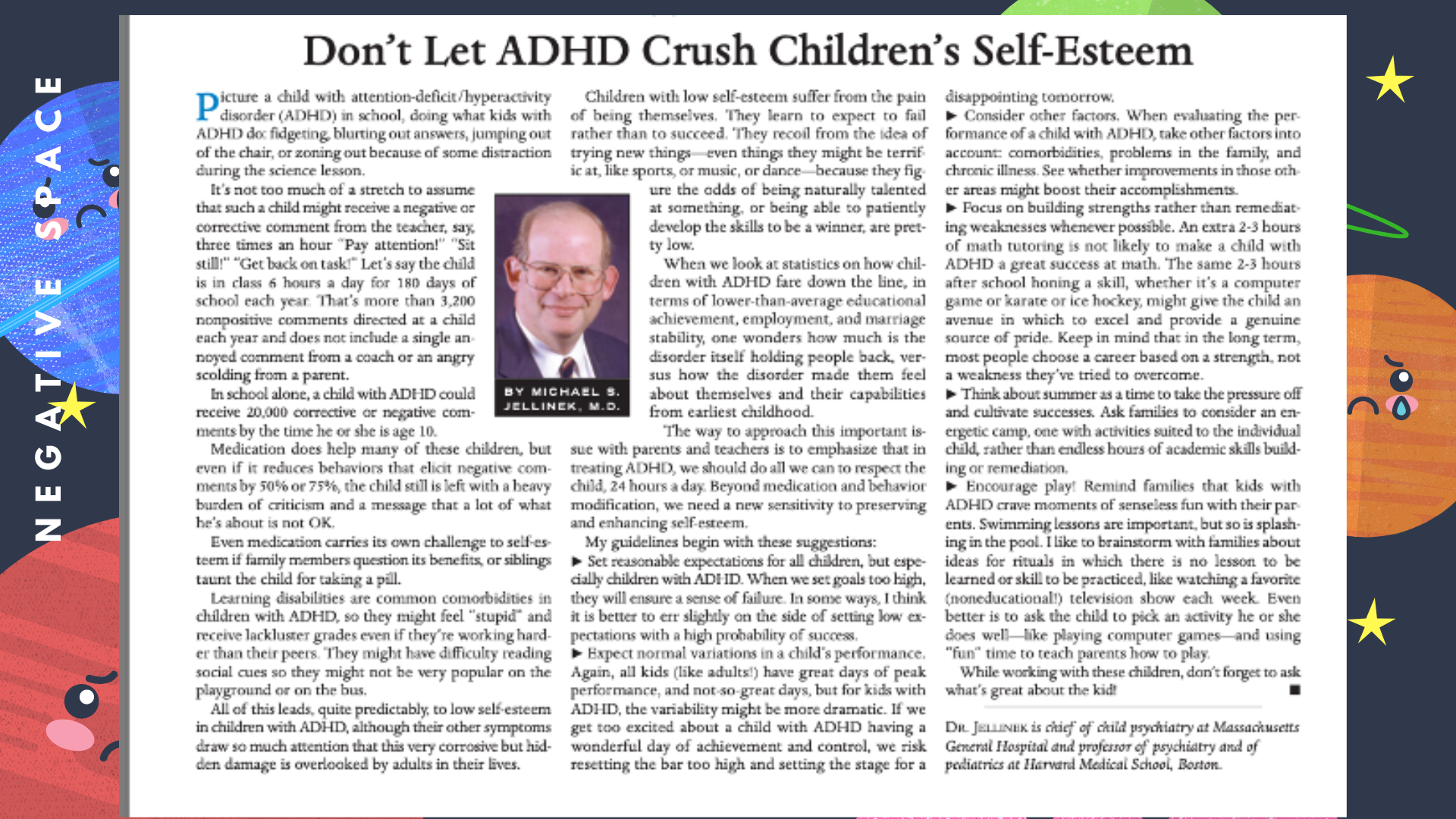
  • An article titled 'Don't Let ADHD Crush Children's Self-Esteem' with a photo of Dr. Michael S. Jellinek, M.D., a psychiatrist, appears in a magazine or journal. The article discusses children's ADHD, self-esteem, and various strategies for managing the disorder.

    20K negative comments.

    This short article has been on my radar since PhD days, when the idea that chronic stress, hypervigilance and repeated ā€œmicro‑threatsā€ could shape immune and autonomic function was only just emerging in the literature. At that time, linking frequent rejection and criticism (as described in this ADHD opinion piece) with later presentations such as POTS, MCAS, hEDS and broader dysautonomia was still considered speculative, rather than clinically obvious.

    What stands out now is how clearly this estimate of tens of thousands of additional negative messages helps explain the allostatic load many ND peeps carry into adolescence and then adulthood (and this load just gets bigger and bigger). It really helps me explain why so many present with complex, overlapping dysautonomia and autoimmune‑like symptom profiles. We are a fragile ecosystem!

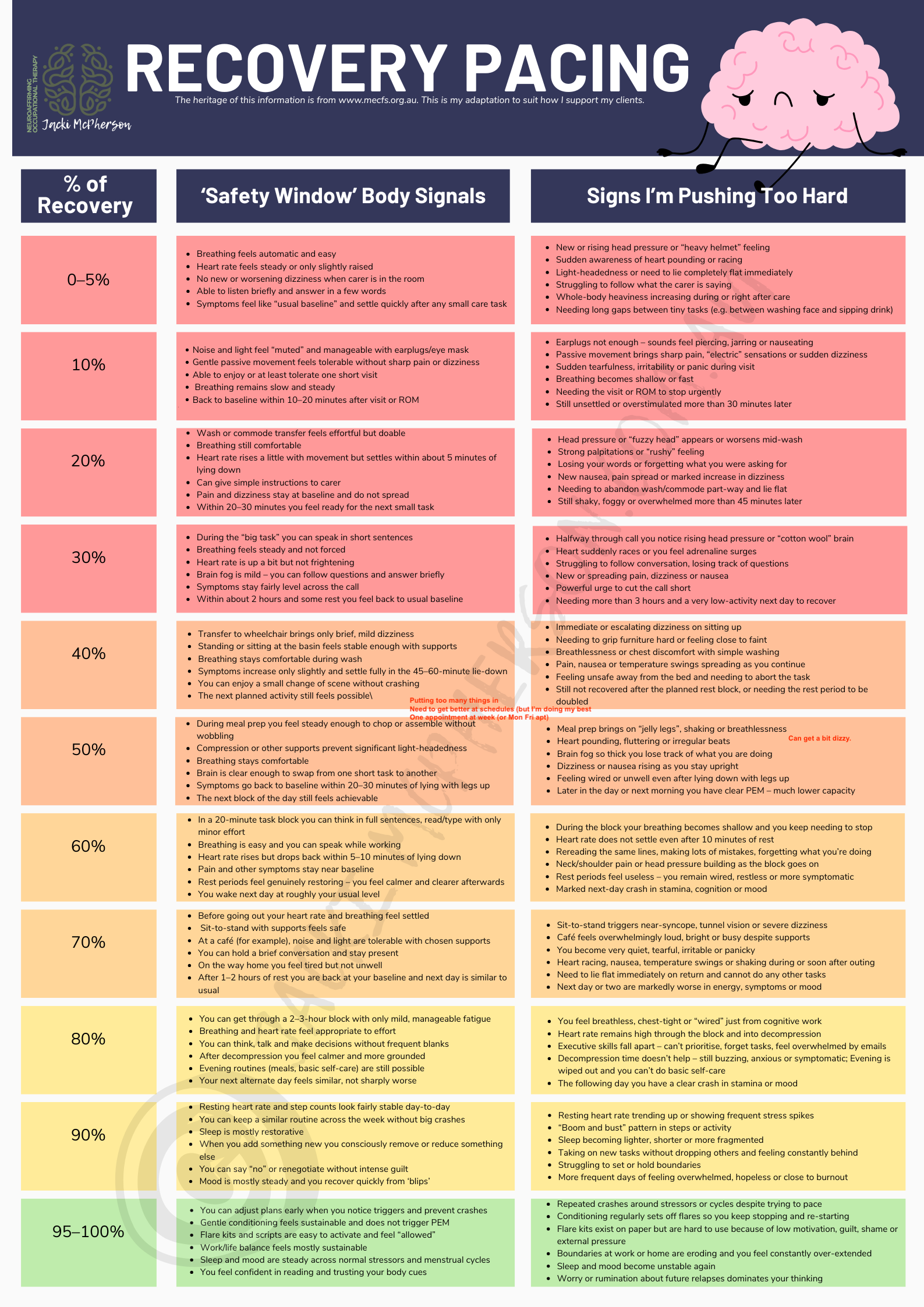
  • A chart titled 'Recovery Pacing' with tips for different stages of recovery from mental health or neurological issues, divided into colored sections from 0% to 100% recovery. Each section lists signs and safety indicators for that stage, with a supportive, illustrated pink brain character at the top right corner.

    KNOW WHEN YOU'RE 'PUSHING TOO HARD!'

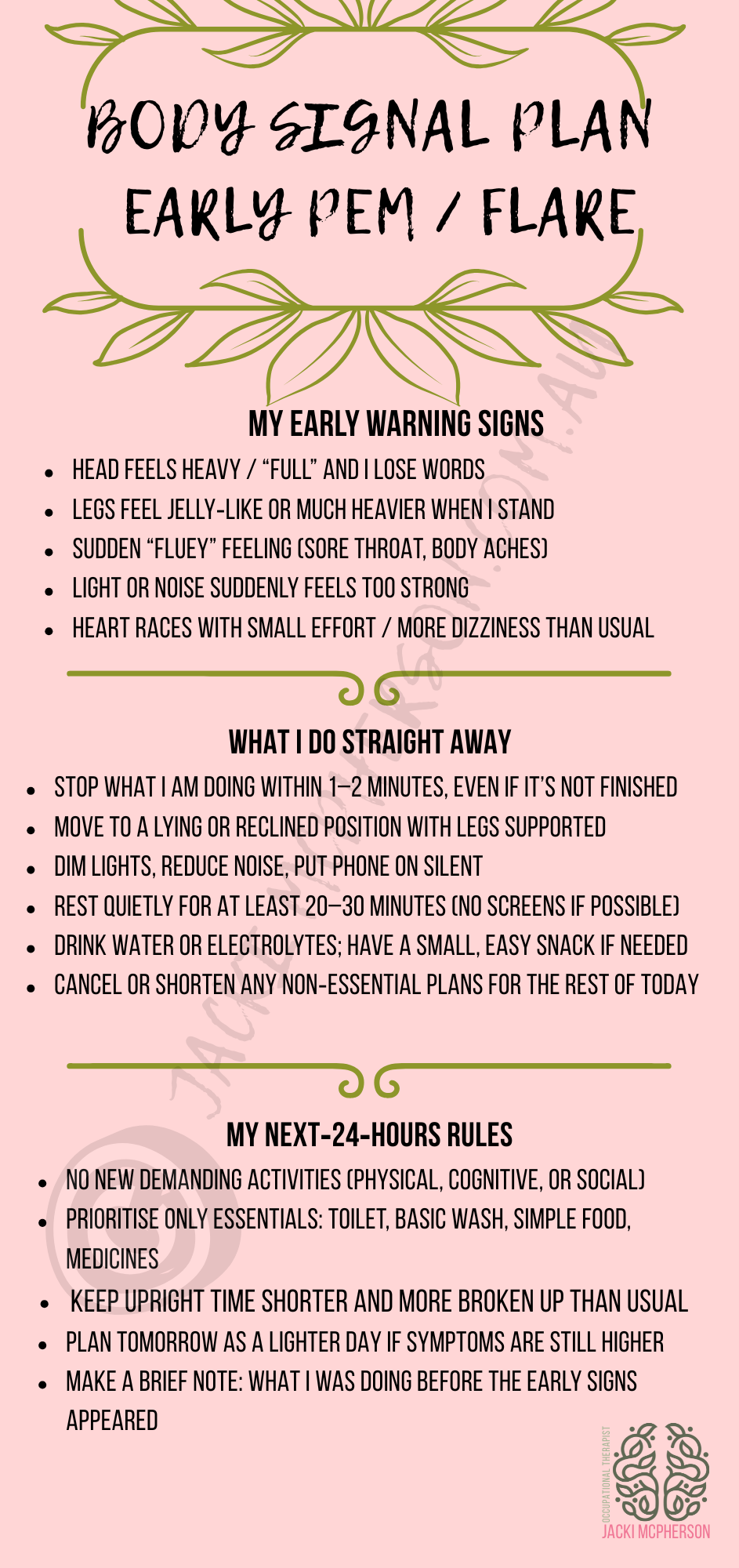
  • A pink and green informational poster titled "Body Signal Plan Early PEM / Flake" with tips for managing symptoms and rules for the next 24 hours, including strategies for rest, hydration, and reducing non-essential activities.

    A handy 'go-to' for PEM mitigation.

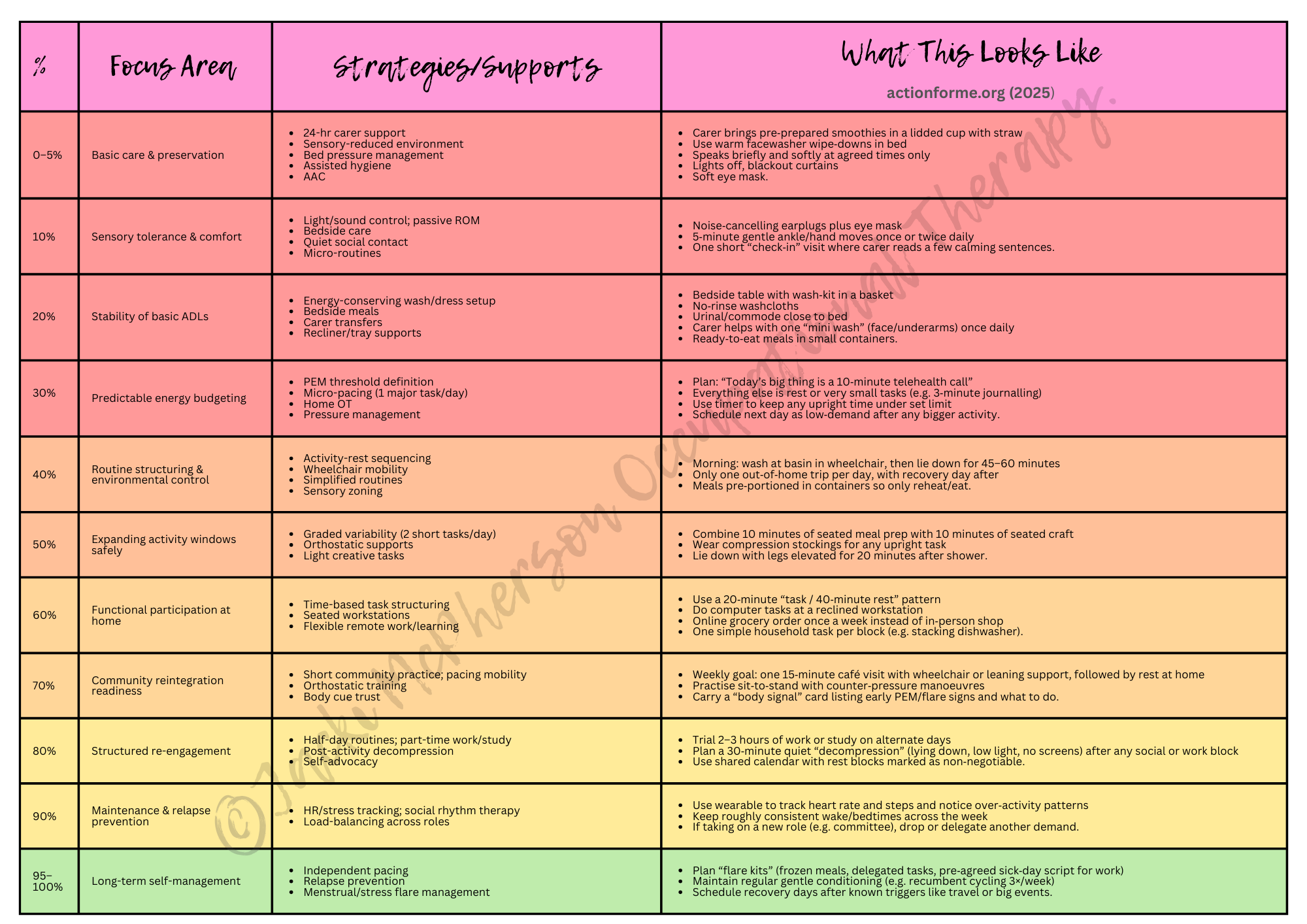
  • A color-coded chart detailing strategies for supporting and supporting stroke recovery, with columns labeled '% Focus Area,' 'Strategies/supports,' and 'What This Looks Like,' including specific interventions and examples for each focus area.

    Functional Abilities Table

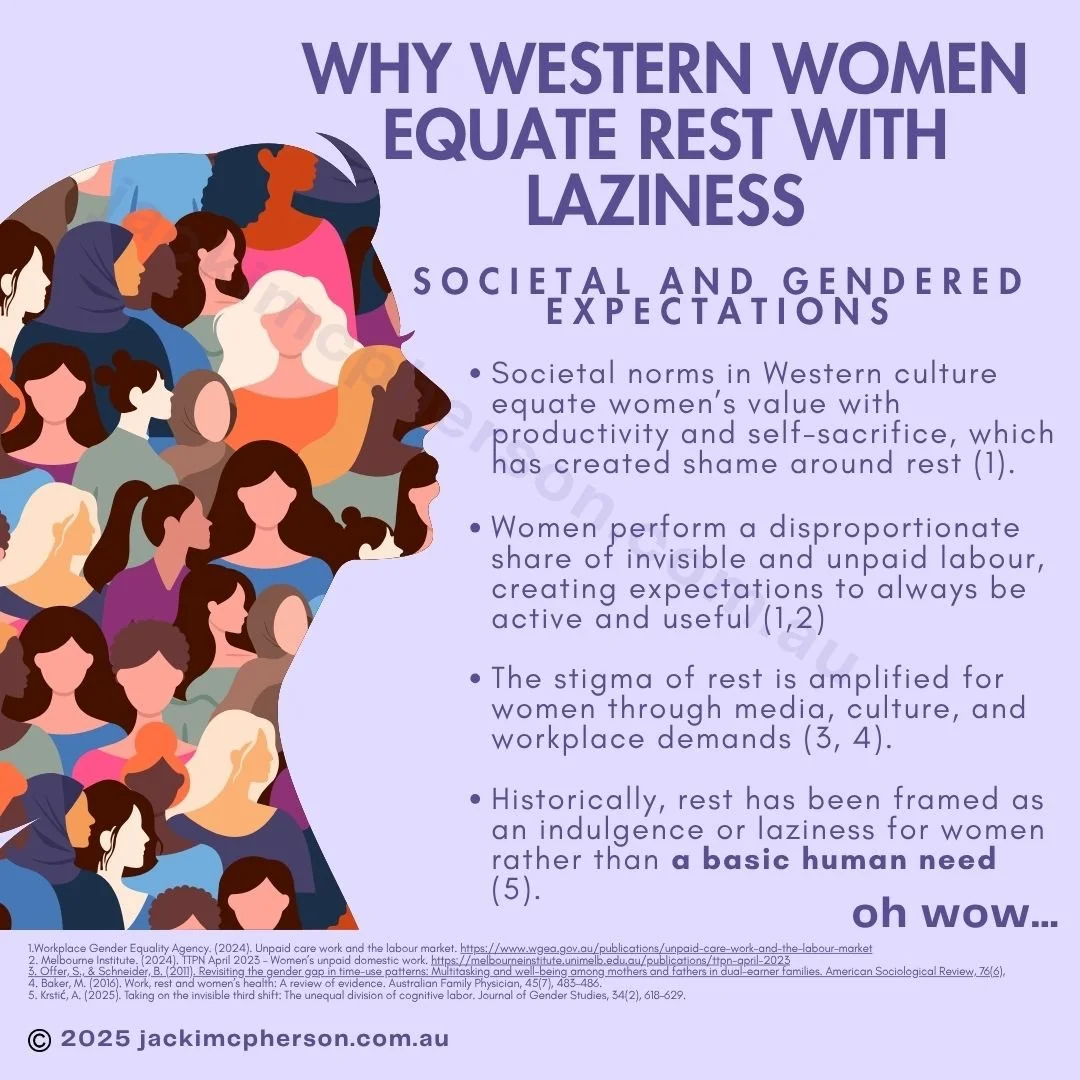
  • Illustration of diverse Western women with varying skin tones, hairstyles, and head coverings, alongside text explaining societal and gendered expectations around rest and laziness.

    REST - Why Women Aren't good at it

  • Illustration of a cute yellow duck with an orange beak, peeking over a yellow-orange banner that reads 'I Can Count to 10'.

    The Power of 10!

  • A colorful graphic depicting a 'stress bandwidth' scale from 1 to 10. It shows different zones with descriptions: 1- Super-blue, 2- I'm blue, 3- I'm a bit down, 4- I'm still in my green zone, 5- Green zone, calm and in control, 6- I'm a little edgy but still in my green zone, 7- In orange zone with some loss of control, 8- Twitchy and irritable, 9- Not feeling psychologically in control, 10- Can't cope with full meltdown.

    Stress Bandwidth.

  • An informational poster titled 'The Power of Self-Respect Walking Away from Disrespect' with illustrations of a sad girl holding a backpack and three other outline characters, accompanied by sections discussing understanding unkindness, self-respect, misconceptions about popularity, and consequences of tolerance.

    Being OK with walking away from disrespect

  • Pink infographic with cartoon illustrations of two girls and text about managing race day anxiety, including tips like accepting nerves, visualization, deep breathing, emotional boost, reframing butterflies, and no comparisons, highlighting mental health importance.

    Understanding Race-day Anxiety

  • An illustrated infographic titled "Speaking Your Truth" with a woman with blue hair and closed eyes. She has a plant with colorful flowers and leaves growing from her head, and a steaming cup nearby. The infographic contains various sections about emotional and mental health, including topics like boundaries, honesty, and self-care, with some text overlay and a pastel-colored background.

    The Power of Saying NO!

  • A colorful infographic titled 'Pros and Cons of Distance Education (DE)'. It lists various advantages and disadvantages of distance education, including personalized support, confidence building, social interaction challenges, parental effort, social isolation, extracurricular limitations, authenticity concerns, risk reduction, and health benefits. The infographic uses icons such as hearts and a person at a computer, with a background featuring a person working on a laptop and a hashtag symbol.

    Pros and Cons of Distance Education.

  • Infographic titled 'The Power of Inner Calm and Self Compassion in Parenting.' It features illustrations of children and parents, and text discussing inner calm, self-compassion, eliminating comparison, positive impact on kids, and embracing self-acceptance. The design includes decorative stars, a hand holding a flower, a person playing guitar, and a person with an umbrella.

    Compassionate Parenting.

  • Infographic illustrating the cycle of rejection sensitivity with six stages: 1. Sensitivity to Rejection, 2. Misinterpretations and Overreactions, 3. Masking, 4. Pushing Others Away, 5. Confirmation Bias, 6. Reinforcing the Cycle.

    Understanding Rejection Sensitivity

  • Tips for better sleep, including creating a routine, going to bed at the same time, creating sleep associations, considering temperature, avoiding caffeine and screens, and exercising regularly, with illustrations of a person in bed, a clock, a person relaxing, a bed, and sleep symbols.

    Sleep Hygiene

  • Infographic titled 'Cheers to Tears: The Mental Health Toll of Parental Expectations on Youth Sport.' The infographic is divided into sections numbered 1 through 6, each with a circular icon and descriptive text discussing various aspects of parental pressure on young athletes, including comparison and competition, micromanagement, early specialization, overemphasis on winning, living vicariously, conditional love, and ignoring signs of stress. The background is blue with dotted patterns, and the content emphasizes mental health challenges faced by youth in sports due to parental expectations.

    Understanding the impact of parental expectations on youth sport

  • Women to Women Incivility in the Workplace

    Women to Women Incivility in the Workplace

  • Infographic titled "The Power of Listening" with sections on understanding, showcasing, learning, building relationships, conflict resolution, and respectful silence, featuring a cartoon woman with pink hair meditating and decorative elements.

    Listening is a super-power!

  • Infographic titled "Relationship Tips" with seven numbered sections offering advice on maintaining healthy relationships, featuring illustrations of couples, hearts, and decorative elements.

    Maintaining individuality in a new relationship.

    Description goes here
  • An infographic titled 'Exploring the Decline of Accountability and Responsibility in the Age of Individualism.' It discusses shift to individualism caused by technology and globalization, highlighting positive aspects like independence and innovation, and negatives such as social isolation and conformity. The infographic emphasizes achieving balance through community, education, social equity policies, and a culture of empathy, promoting collective responsibility and respect for individual freedoms.

    Individualism vs community.

  • A guide about decoding obsession, explaining what obsession is and what to do about it, including tips like setting boundaries and preventing escalation.

    Personal safety...

  • An infographic titled 'Unveiling the Hidden Vulnerability: Autism and Online Sexual Behavior' with text discussing autism, social challenges, online dating sites, exploitation, misrepresentation, and statistics about sexual abuse among autistic individuals.

    Autism and online sexual behaviour

  • A colorful infographic titled 'The Art of Friendship' with sections on developing friendship skills, including active listening, empathy, skills learned, accountability, respect for opinions, and constant vigilance. The infographic features pink and blue icons and emphasizes that friendship requires effort, understanding, and respect.

    The Art of Friendship.

  • Infographic titled 'Super-Basic Tips to Being a Good Friend' with tips on social cues, being authentic, respecting others, walking in their shoes, and thinking before speaking, including illustrations of people and symbols.

    Basic guide to making friends

  • An infographic explaining behaviors of mean girls, including criticism, gossip, rejection and exclusion, arrogance, cyberbullying, and understanding girl behavior, with illustrations of a girl holding her head in distress and various decorative icons.

    Unpacking the mean-girl phenomenon...

  • Pink infographic titled 'SITTING WITH IT' explaining the meaning, importance, and neuropsychological perspective of sitting with emotions. Includes illustrations of a chair, a brain, and a crossed hands hugging icon.

    The power of 'sitting with it'....

  • An informational infographic with tips for self-care, hobbies, and activities like photography, crafting, library exploration, training dogs, job hunting, and drawing. It features illustrations of a girl with a cup, a woman taking a photo, craft supplies, a library shelf, a woman walking a dog, a computer with a job search icon, and a hand drawing.

    Self care tips...

  • Illustrated infographic titled "Boundaries for When I’m on Camp" with six sections, each featuring a person, tips on managing energy and self-care, including estimates of energy required, planning breaks, practicing self-advocacy, monitoring social and sensory energy, and sleep and nutrition.

    Tips for school-camp.

  • Infographic titled '9 techniques for fabulous conversations' with sections on mindful listening, using conversation prompts, pausing before responding, practice turn-taking, setting conversation goals, tuning into emotional triggers, practicing self-compassion, and regulation. Features illustrations of a woman sitting cross-legged and a woman with hand over heart, along with colorful icons and text boxes.

    Tips for connecting...

  • An infographic explaining Jacki's adaptation to the grounding technique, which explores six senses. The six senses are sight, feel inside, hear, smell, taste, and touch, each represented by corresponding icons and numbered circles.

    My twist on the 54321 idea...

  • Infographic with tips for teaching structure and routine, including visual supports, breaking tasks down, consistency, keeping instructions simple, and using examples.

    Teaching structure and routine...

  • A colorful infographic titled 'Community Engagement Support Worker Guide' provides suggestions for community participation, cultural exploration, outdoor activities, library activities, visiting animals, music and dance, arts and crafts, and cooking.

    Community Engagement Ideas

  • Colorful infographic featuring tips to increase fitness and exercise routines, including routines, outdoor exploration, modified sports, sneaky movements, creative exercises, and the importance of routine with related illustrations of dumbbells, jump rope, exercise ball, running shoes, and a kettlebell.

    Ideas for Support Worker Physical Activities

  • An infographic about receiving feedback, featuring sections on grounding oneself, practicing phrases, challenging negative thoughts, and growth. Includes illustrations of people practicing feedback techniques, a woman with a head full of tangled thoughts, and a person in a wheelchair.

    Pragmatic ideas for receiving feedback

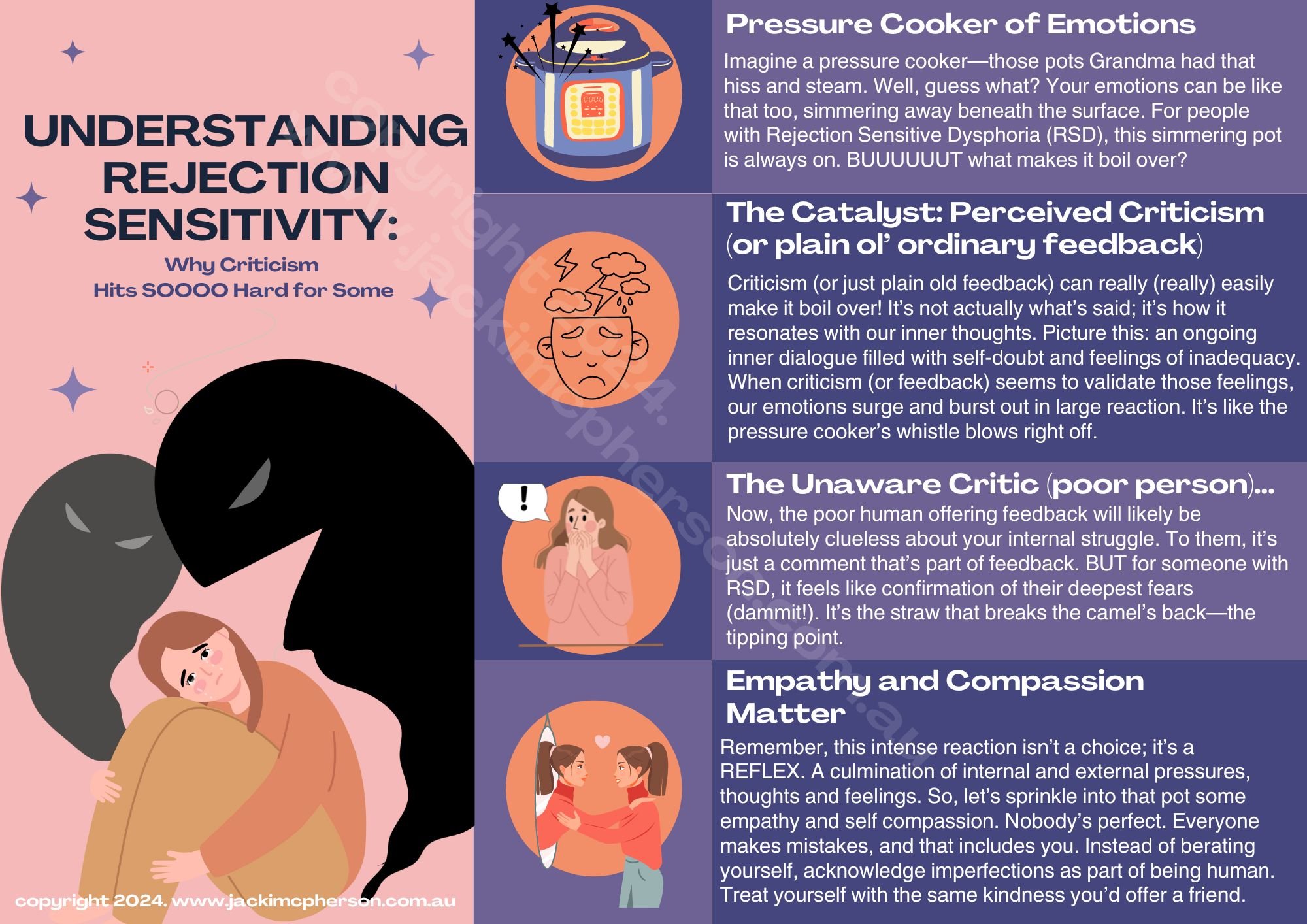
  • Illustration of a girl hugging a person with dark hair on a pink background with star shapes. The girl has light brown hair and a pink sweater, while the person has dark hair and a beige outfit.

    Rejection sensitivity and feedback

  • Infographic demonstrating triangle breathing exercises, starting at a blue 'Start here' point, inhaling slowly to the top, then exhaling down to the bottom, with instructions to breathe in for 4, out for 6, and hold at various points.

    Breath Practice - Use the anchor of going to the toilet to create the habit.